
The ongoing trial of Lindsay Clancy has placed maternal mental health, postpartum psychosis, clinical decision-making, and the criminal justice system into the national spotlight. It is an extraordinarily triggering and difficult case involving the deaths of three children, and the courts must determine the questions of criminal responsibility before them.

But there is another conversation we cannot afford to lose in the detail of one case:
Why does our healthcare system still struggle to adequately support mothers after they give birth?
The fourth trimester, the critical weeks and months following childbirth, is one of the most physically, emotionally, socially, and psychologically vulnerable periods in a mother’s life. Yet it is often the point when our healthcare system becomes least present.
During pregnancy, mothers may have appointments every few weeks and eventually every week. Their blood pressure is monitored, glucose is monitored. Their baby’s development is followed. Questions are asked. Tests are ordered.
Then the baby arrives.
Suddenly, much of the healthcare attention shifts to the newborn while the mother, who has just experienced one of the most significant physical and hormonal transitions of her life, is expected to recover, feed and care for an infant, function on limited sleep, recognize her own warning signs, navigate insurance, schedule appointments, and ask for help if something feels wrong.

The American College of Obstetricians and Gynecologists (ACOG) has explicitly called for postpartum care to be an ongoing process rather than a single encounter, beginning with contact within the first three weeks and continuing with individualized care. ACOG also recognizes that postpartum care must address physical, social, and psychological well-being.
The standard is clear!
Our system has not consistently caught up.
Three System Failures We Must Address
- We Have Built a Fragmented Maternal Healthcare System
Pregnancy, delivery, postpartum care, primary care, behavioral health, pediatrics, social services, and community support too often function as separate systems.
A mother may see an obstetrician during pregnancy, deliver with another clinical team, receive mental health treatment from another provider, take her baby to a pediatrician, and seek social services somewhere else entirely.
Each provider may see one piece of the picture.

Who sees the whole mother?
This fragmentation becomes especially dangerous when symptoms are changing rapidly. A concerning statement to one provider, severe insomnia reported to another, a medication change made elsewhere, and behavioral changes noticed by family may never become one complete clinical picture.
Continuity of care cannot simply mean giving a mother another appointment.
It must mean that someone is responsible for connecting the dots.
- Our Maternal and Behavioral Health Workforce Is Asked to Carry Too Much with Too Little
We cannot discuss maternal healthcare failures without discussing the people expected to deliver that care.
Clinicians are working within systems marked by staffing shortages, limited appointment times, fragmented referrals, insurance restrictions, administrative burdens, and insufficient access to specialized perinatal mental healthcare.
Even highly committed professionals cannot consistently provide comprehensive care when the infrastructure surrounding them makes continuity difficult.
And perinatal mental health conditions are not uncommon. ACOG identifies perinatal mood and anxiety disorders among the most common complications occurring during pregnancy and the first 12 months after delivery and notes that these conditions remain underdiagnosed and undertreated.
A screening questionnaire alone is not a mental health system.
We need sufficient professionals to assess the answers, follow up, coordinate treatment, monitor changes, and intervene when someone’s condition escalates.

- Policy Has Not Fully Matched What We Know About the Fourth Trimester
This is fundamentally a policy issue.
For decades, healthcare financing and delivery structures treated postpartum care as though recovery could be addressed through a limited number of encounters. Important progress has occurred, including expansion of the Medicaid postpartum coverage from 60days to 12months in many states. That policy change recognizes something maternal health advocates have long understood: serious pregnancy-related risks do not disappear six weeks after delivery.
However, insurance coverage alone does not guarantee access.
Policy must move beyond simply paying for postpartum visits. It must establish expectations for continuity, mental health screening and follow-up, care coordination, community health workers, home and community-based support, referral completion and accountability when mothers fall out of care.
A mother should not have become critically ill before the system becomes intensive.

Three Changes We Need Now
First, establish a maternal continuity of care model from pregnancy through the first year postpartum. Every mother should have an identifiable care pathway that connects obstetric care, primary care, behavioral health, pediatric care, and community resources. High-risk mothers should receive more frequent follow up rather than being expected to independently navigate multiple systems.
Second, maternal mental health screening a pathway: not a checkbox. Screening during pregnancy and postpartum must be paired with protocols for risk stratification, referral, follow-up, medication review when appropriate, family education, and rapid escalation. A positive screen should trigger action, not simply documentation in a medical record.
Third, invest in the maternal health workforce and community-based infrastructure surrounding mothers. Healthcare professionals cannot do this work alone. Community health workers, doulas, peer navigators, social workers, lactation specialists, behavioral health clinicians, and trusted community organizations should be integrated into maternal care and sustainably reimbursed.

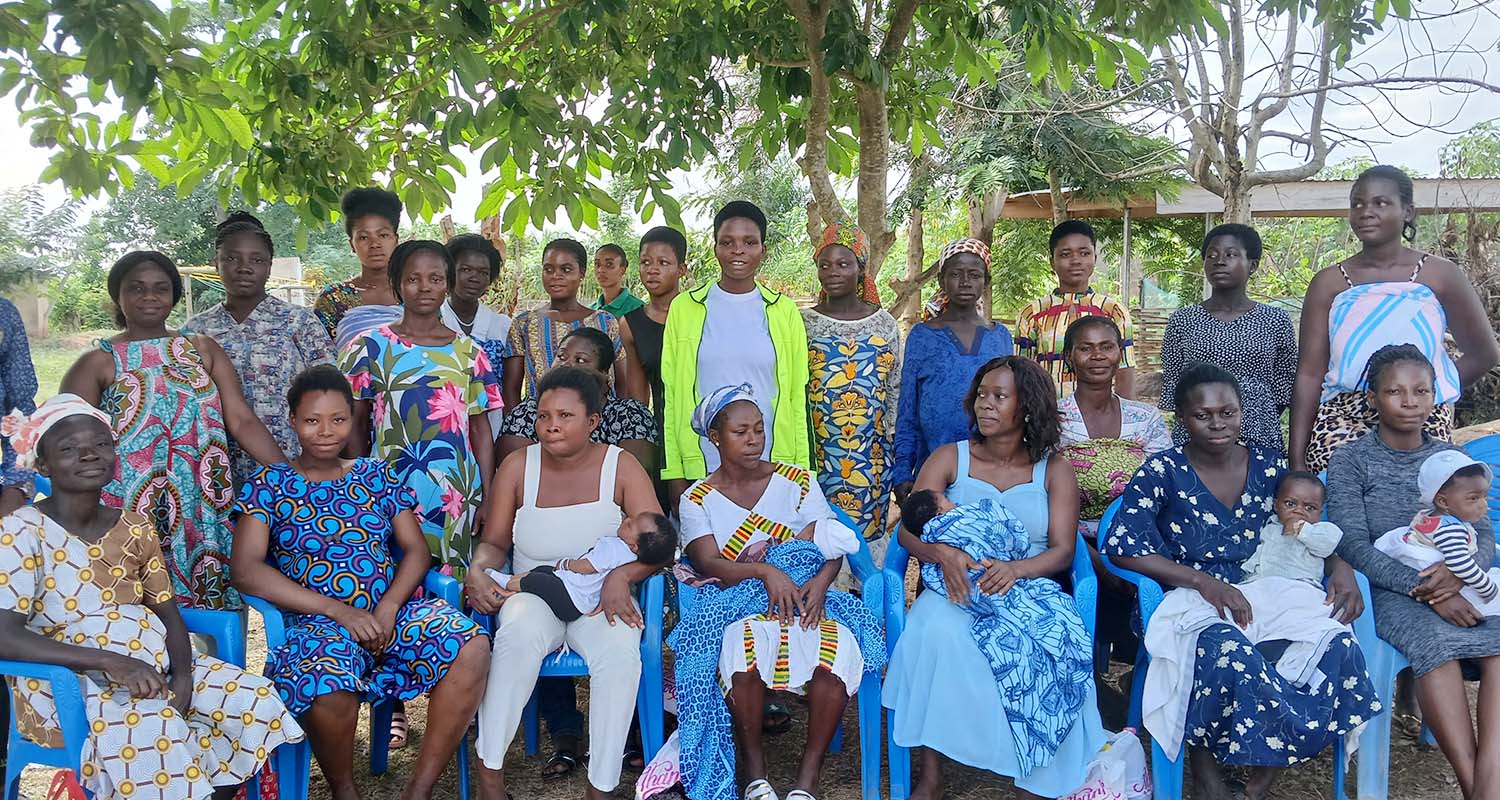
This Is Why SIMI Created Mom Count
At Sustainable Impact Makers International (SIMI), our Mom Count program is grounded in a simple principle:
Maternal health does not begin in the delivery room, and it should not end when a mother leaves it. The program is designed to work with mothers beginning during pregnancy and continuing through the baby’s first birthday. That continuity matters.
Rather than waiting until a mother reaches a crisis point, a longitudinal community-based model creates repeated opportunities to identify changing needs. During pregnancy, those needs may involve health education, preparation for delivery, and nutrition, mental health, scial determinants of health and connection to services.
After delivery, the questions change.
How is Mom recovering?
Is she sleeping?
How is she coping emotionally?
Does she have support?
Did she attend her postpartum appointments?
Does she understand her medications?
Is she experiencing financial or housing instability?
Does she have transportation?
Is she overwhelmed?
Has someone noticed that she simply does not seem like herself?
And perhaps most importantly:

Who is checking on Mom while everyone else is checking on the baby?
That is the system’s benefit of Mom Count.
It creates a bridge between clinical care and everyday life. It gives mothers repeated touchpoints instead of a single opportunity to say they are struggling. It helps connect families to appropriate healthcare and community resources, reinforces health education, supports navigation, and creates opportunities for concerns to be identified earlier.
Mom Count does not replace obstetricians, psychiatrists, pediatricians, or emergency mental health services.
It strengthens the ecosystem surrounding them.

We Need to Stop Waiting for Tragedy to Talk About Maternal Mental Health
The Lindsay Clancy case will continue to generate difficult conversations about medicine, mental illness, family responsibility, criminal responsibility, and the justice system.
Those conversations matter.
But our response cannot end with one woman, one family, or one courtroom.
Every highly publicized maternal mental health tragedy is followed by questions about what someone should have noticed.
We should also be asking:
What did the system make possible to notice?
Who was responsible for following the mother across settings?
What happened after a screening or referral?
Was the family taught what warning signs required emergency intervention?
And what policies existed to ensure that a mother did not disappear between appointments?
Mothers deserve more than healthcare that responds when something has already gone terribly wrong.
They deserve a system designed to remain beside them through pregnancy, birth, recovery, and the transition into motherhood.
Because the fourth trimester is not an afterthought.
It is maternal healthcare.